
Ever wondered how you actually get better at sports? It's...
 LCPE2 zobrazenia·Aktualizované Jun 12, 2026·5 stránky
The Power of Feedback in Learning New Skills
1 / 5
1
of 5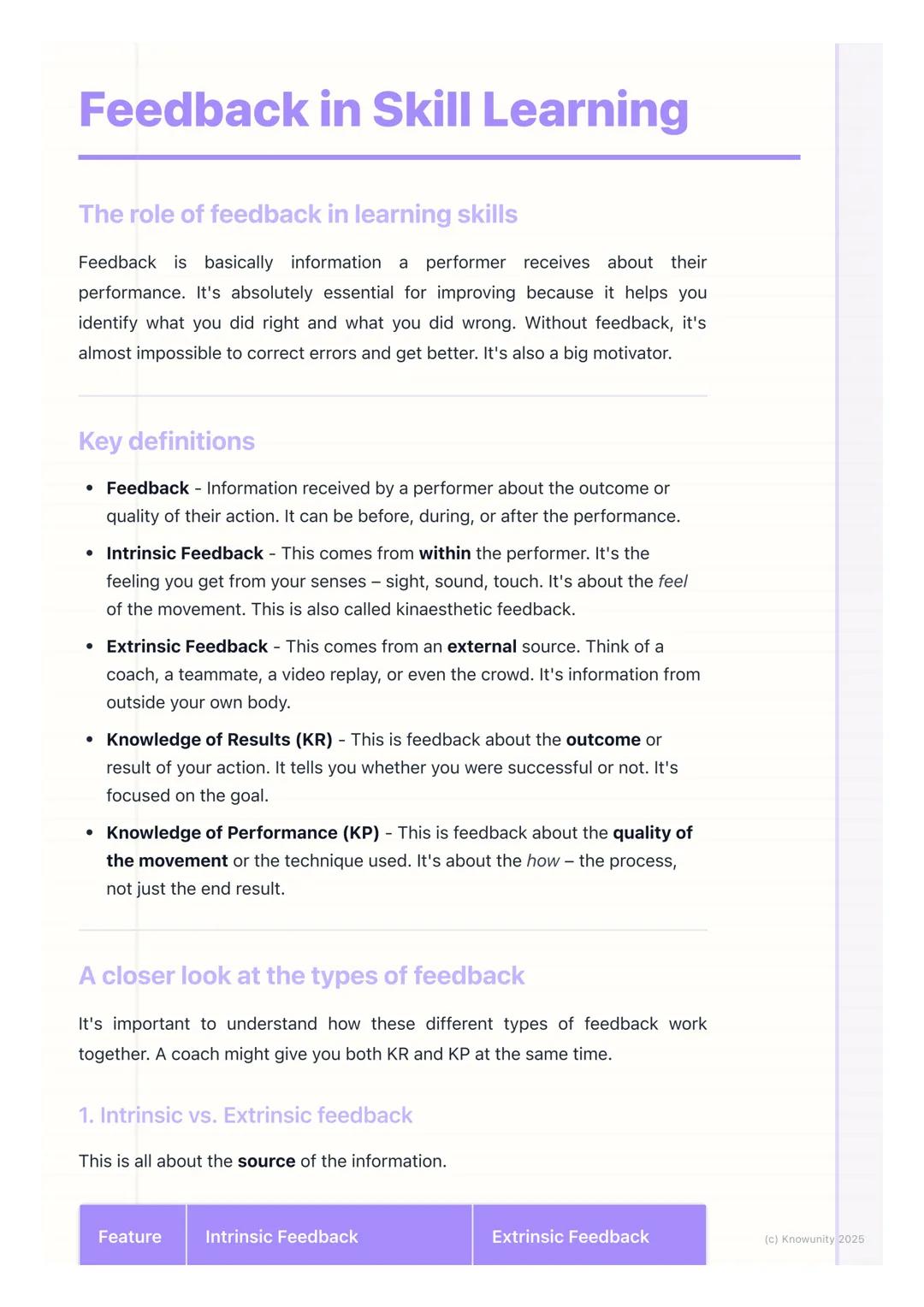
Understanding Feedback in Sports
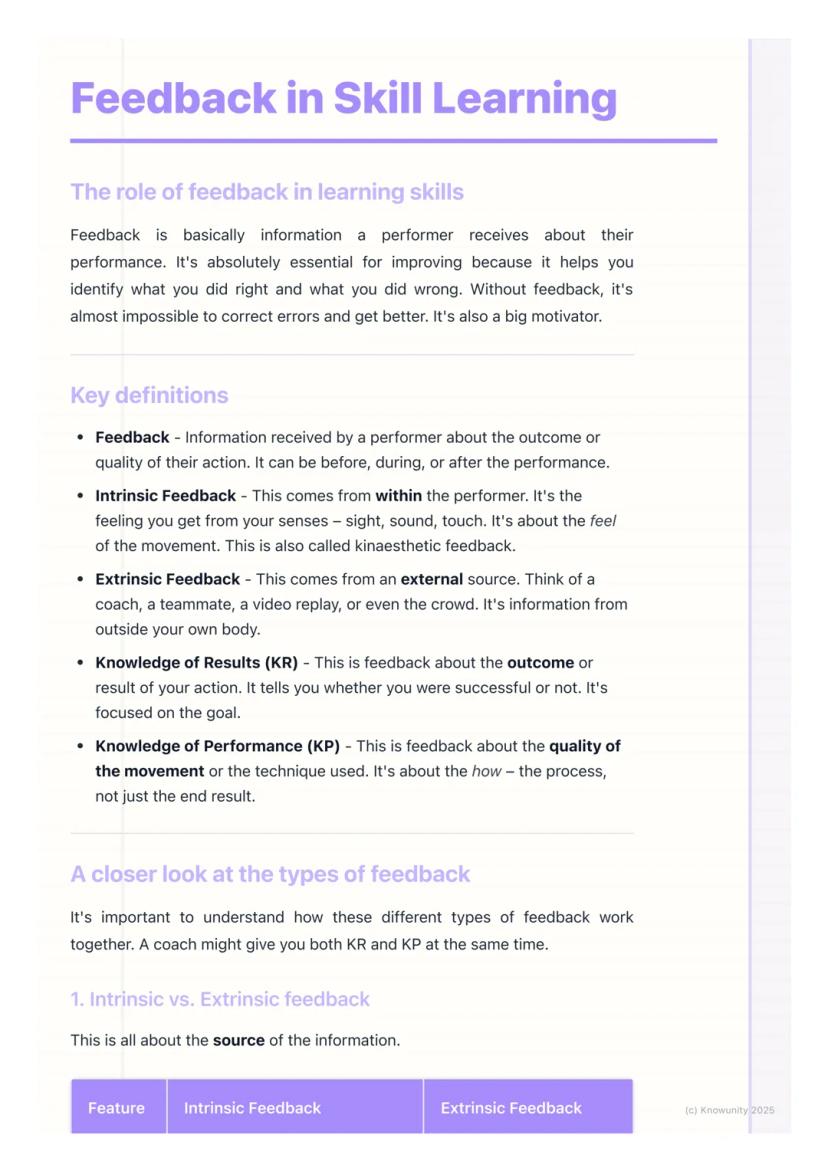
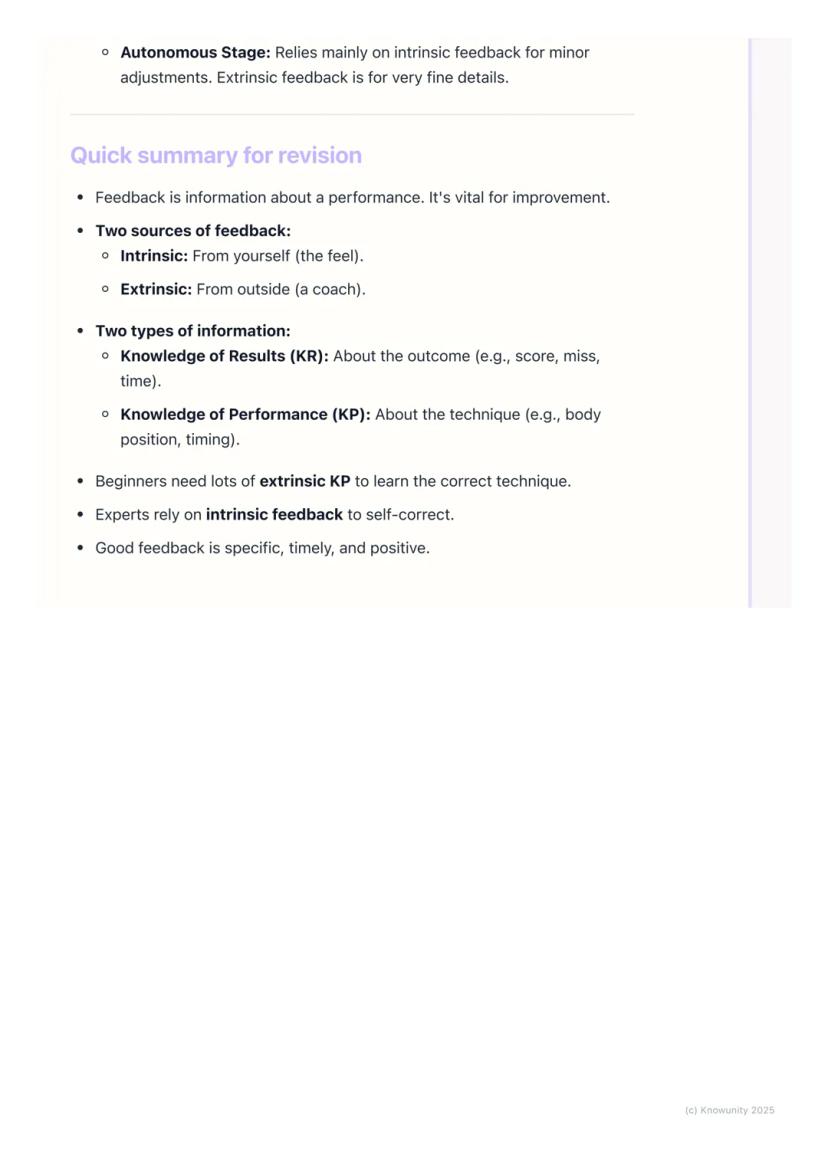
Think about the last time you improved at something - chances are, someone told you what you were doing right or wrong. Feedback is simply information you receive about your performance, and it's absolutely crucial for getting better at any skill.
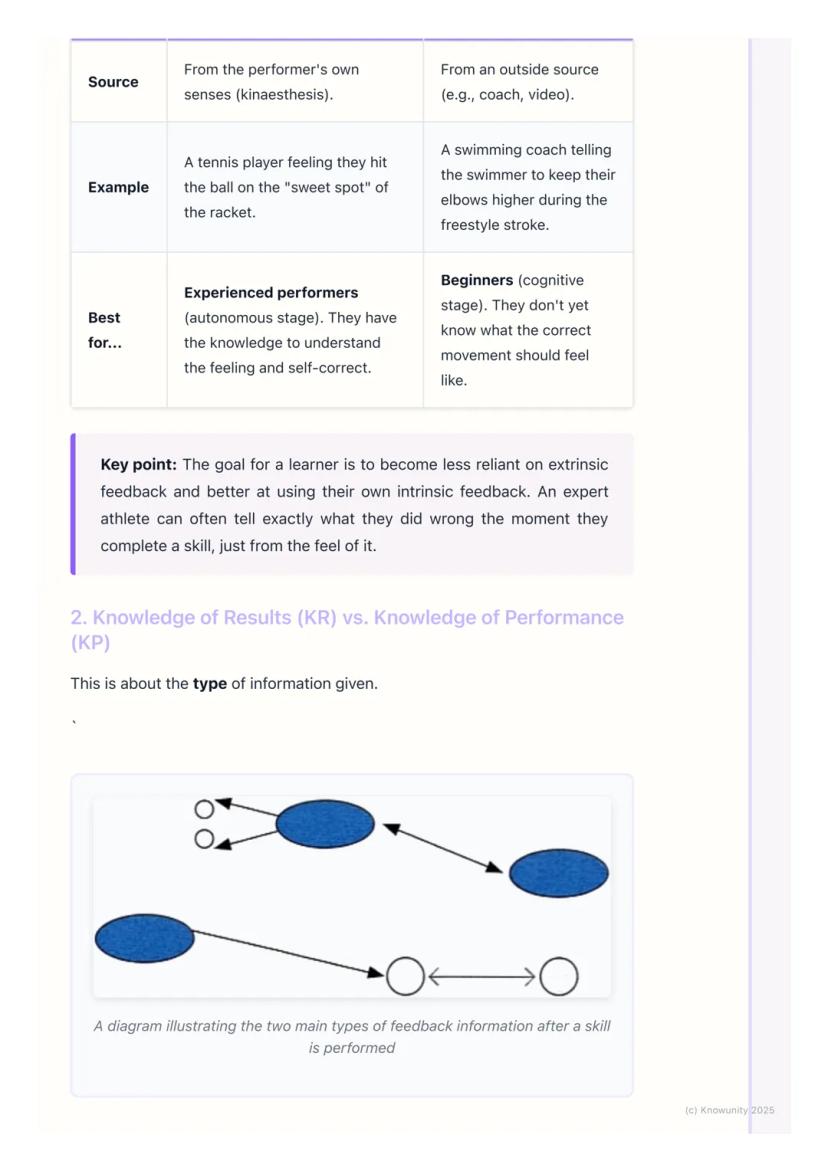
There are two main sources where this information comes from. Intrinsic feedback comes from within yourself - it's that feeling when you know you've hit the sweet spot of a tennis racket or when a football feels perfectly balanced on your boot. This is also called kinaesthetic feedback because it comes through your senses.
Extrinsic feedback comes from outside sources like coaches, teammates, video replays, or even the crowd. A GAA coach shouting "keep your head up" or watching yourself on video are perfect examples of extrinsic feedback.
Remember: The goal is to eventually rely more on your own internal feelings (intrinsic) and less on others telling you what to do (extrinsic).
2
of 5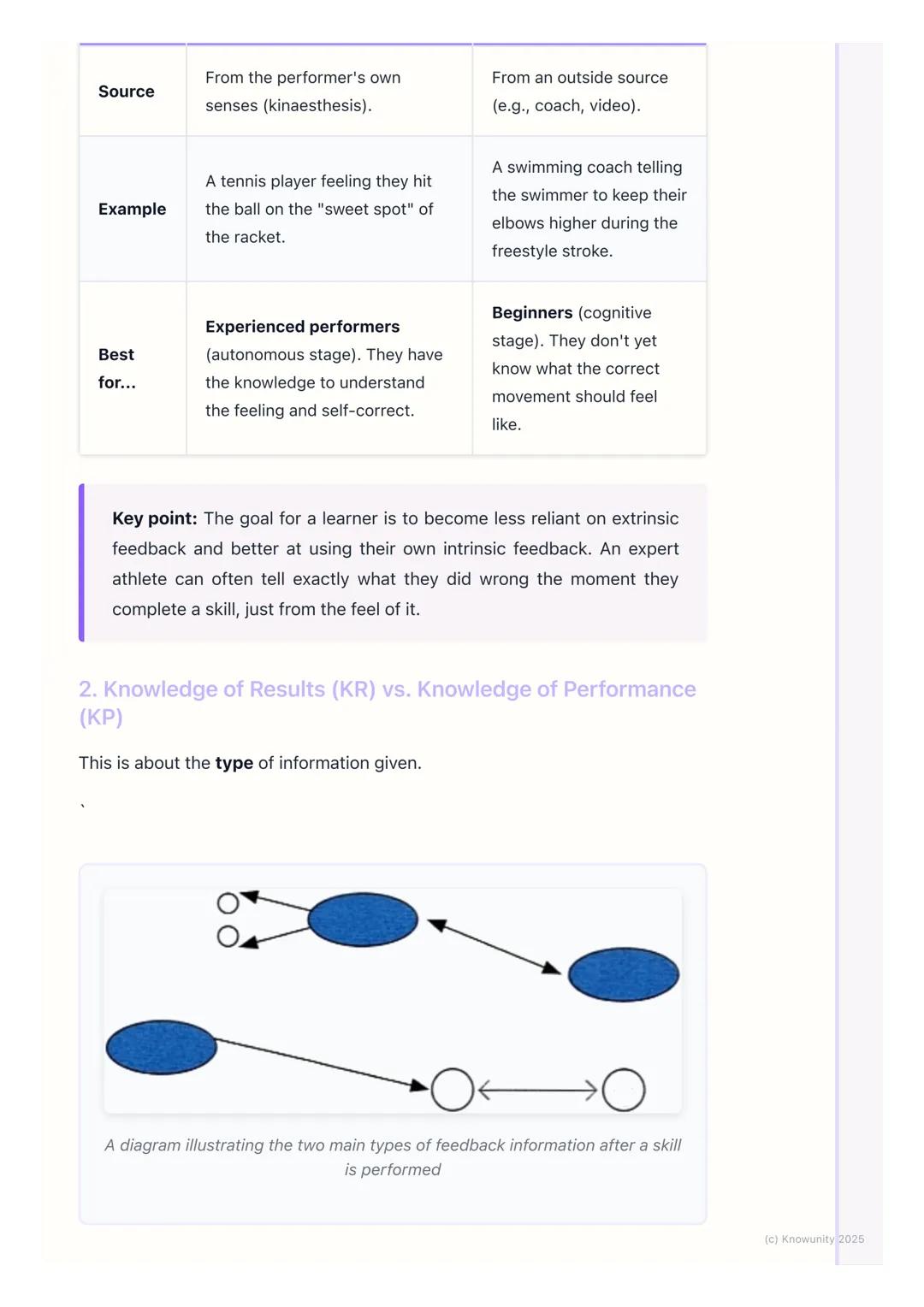
Types of Feedback Information
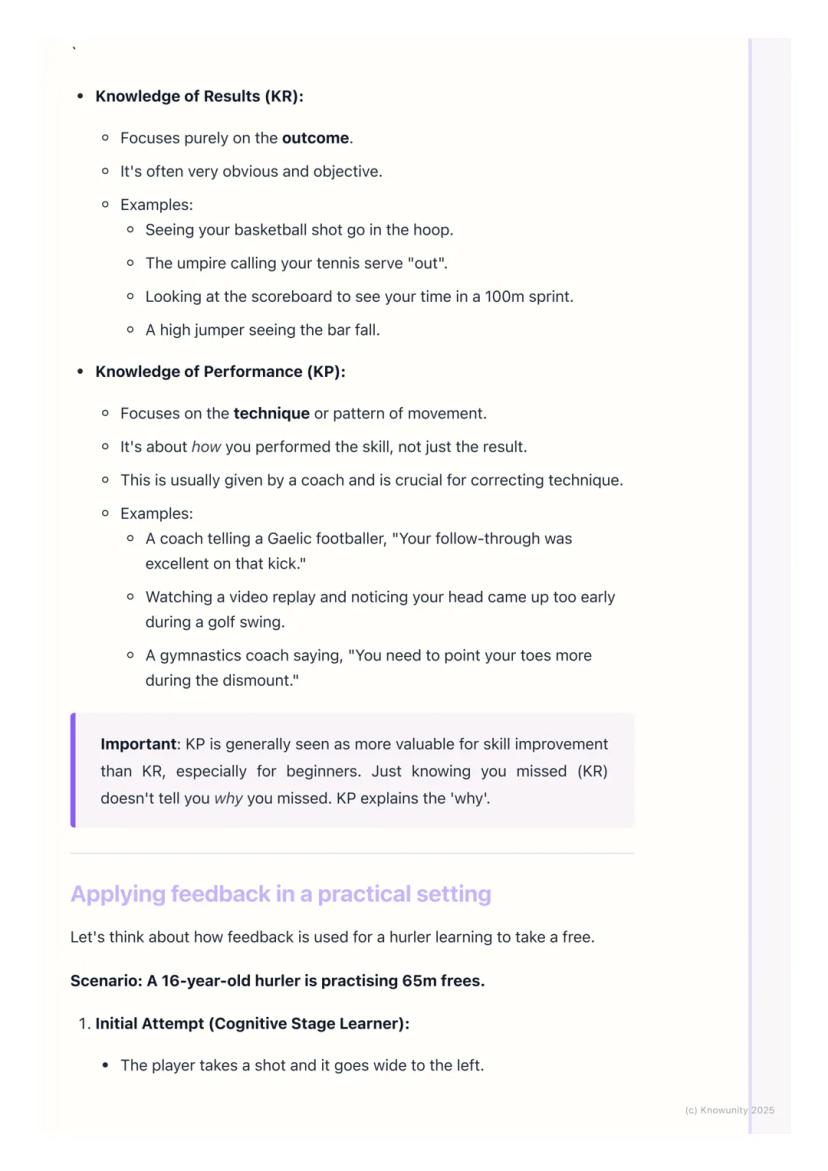
Not all feedback tells you the same thing. Knowledge of Results (KR) is about the outcome - did you score, miss, win, or lose? It's usually pretty obvious: seeing your basketball shot go through the hoop or watching the umpire wave your tennis serve "out."
Knowledge of Performance (KP) is much more valuable for improvement. This focuses on your technique and how you performed the skill, not just the result. When a coach tells a Gaelic footballer "your follow-through was excellent on that kick," that's KP in action.
Here's the thing - just knowing you missed (KR) doesn't help you improve. You need to know why you missed, and that's where KP becomes crucial, especially for beginners who don't yet understand what correct movement should feel like.
Key Point: KP is generally more valuable than KR for skill improvement because it explains the 'why' behind your performance.
3
of 5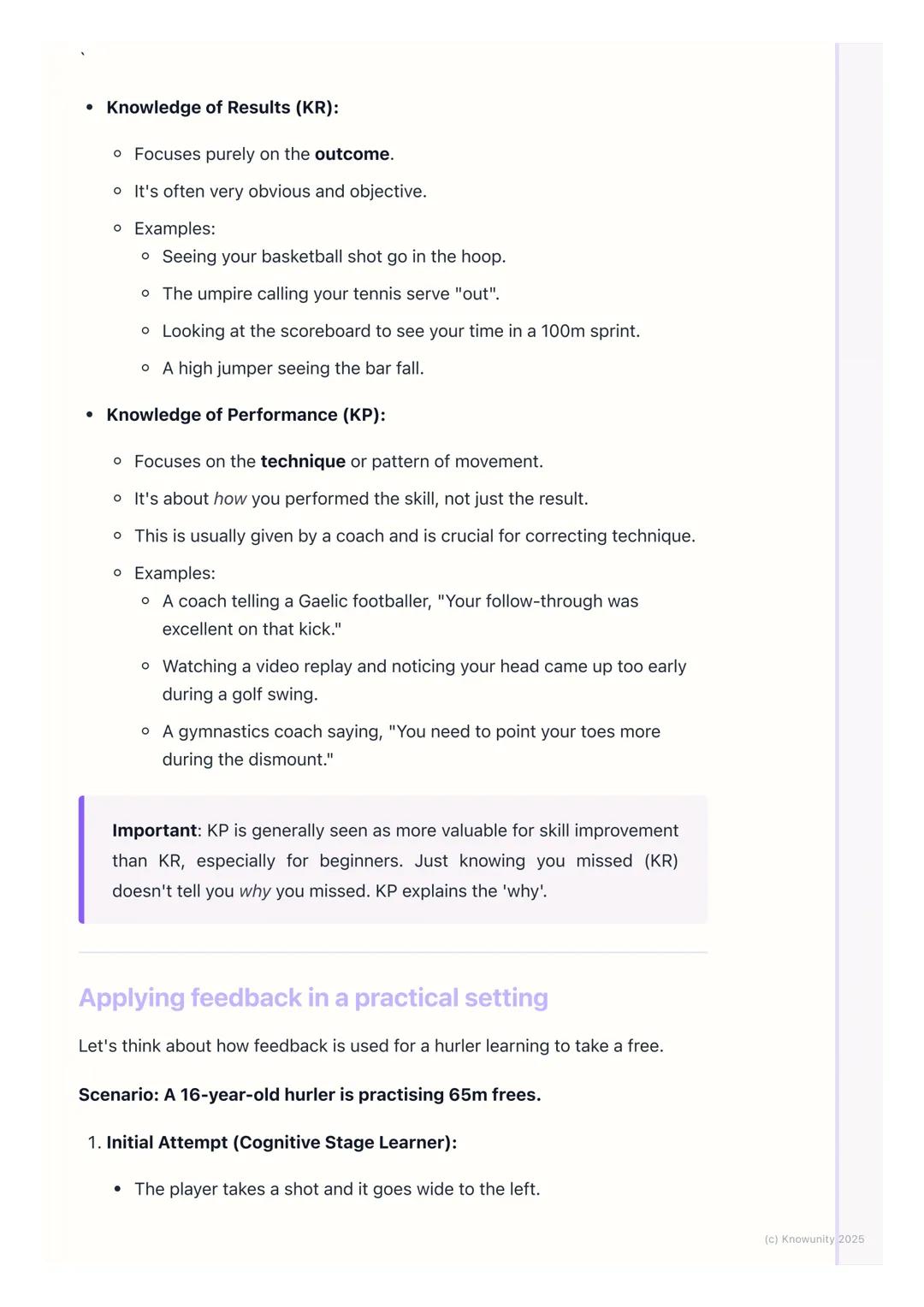
Putting Feedback into Practice
Let's imagine you're a hurler learning to take 65m frees. On your first attempt, the ball goes wide left. You can see it missed (KR), and you might feel the strike was "off" (intrinsic feedback). But the most useful information comes when your coach says, "You lifted your head too early - keep your eye on the ball through the entire swing" (extrinsic KP).
As you progress and reach the associative stage of learning, something interesting happens. You start to develop better internal awareness. When you take another shot, you feel a clean connection and smooth follow-through. Your intrinsic feedback tells you "that felt good" even before you see the ball sail over the bar.
The coach's job then becomes reinforcing what you did right: "Great! See how your body was perfectly balanced that time?" This helps you connect the feeling with the successful outcome.
Pro Tip: Timing matters - feedback works best when given immediately after the skill, so you can connect it to what you just did.
4
of 5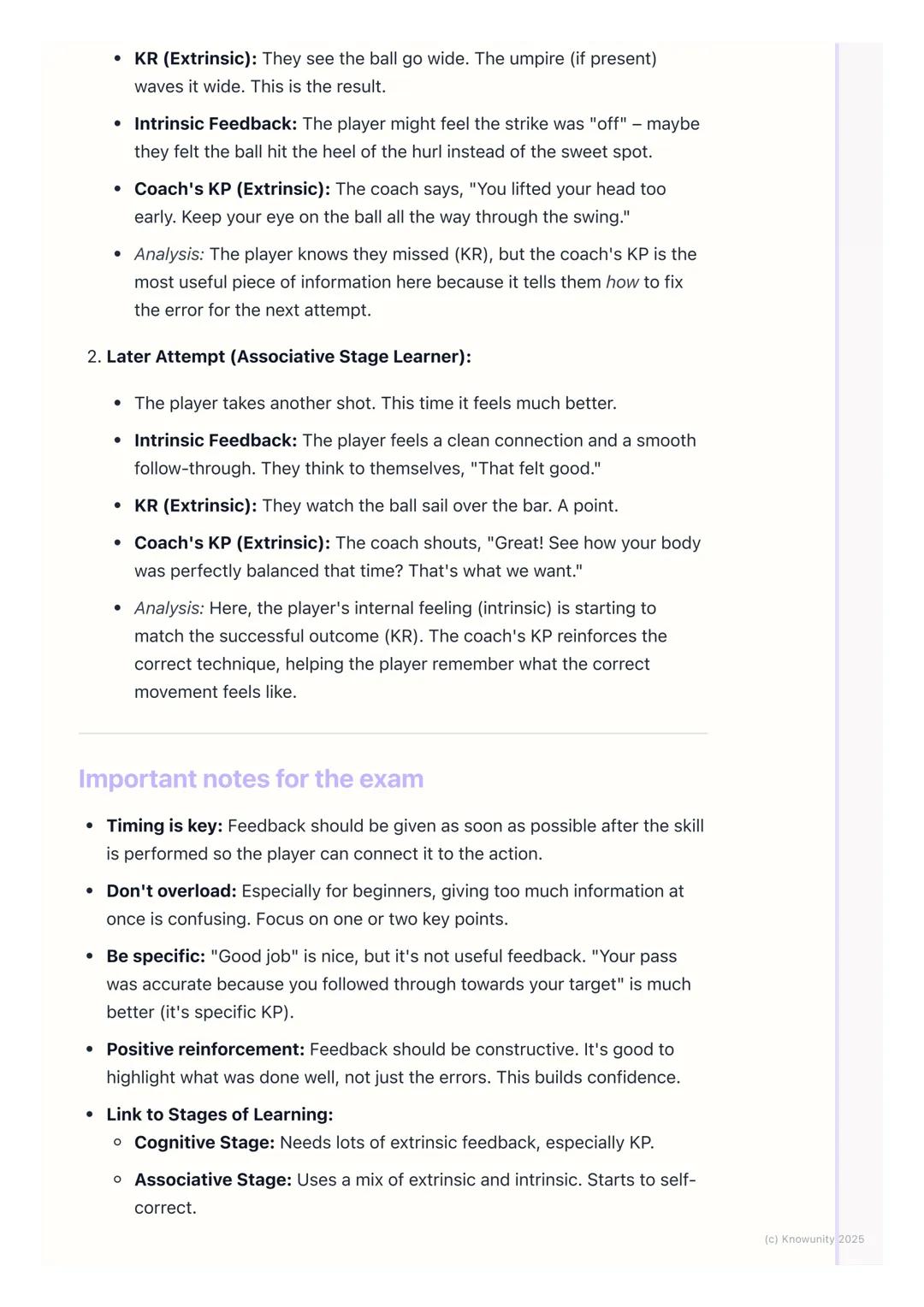
Feedback and Learning Stages
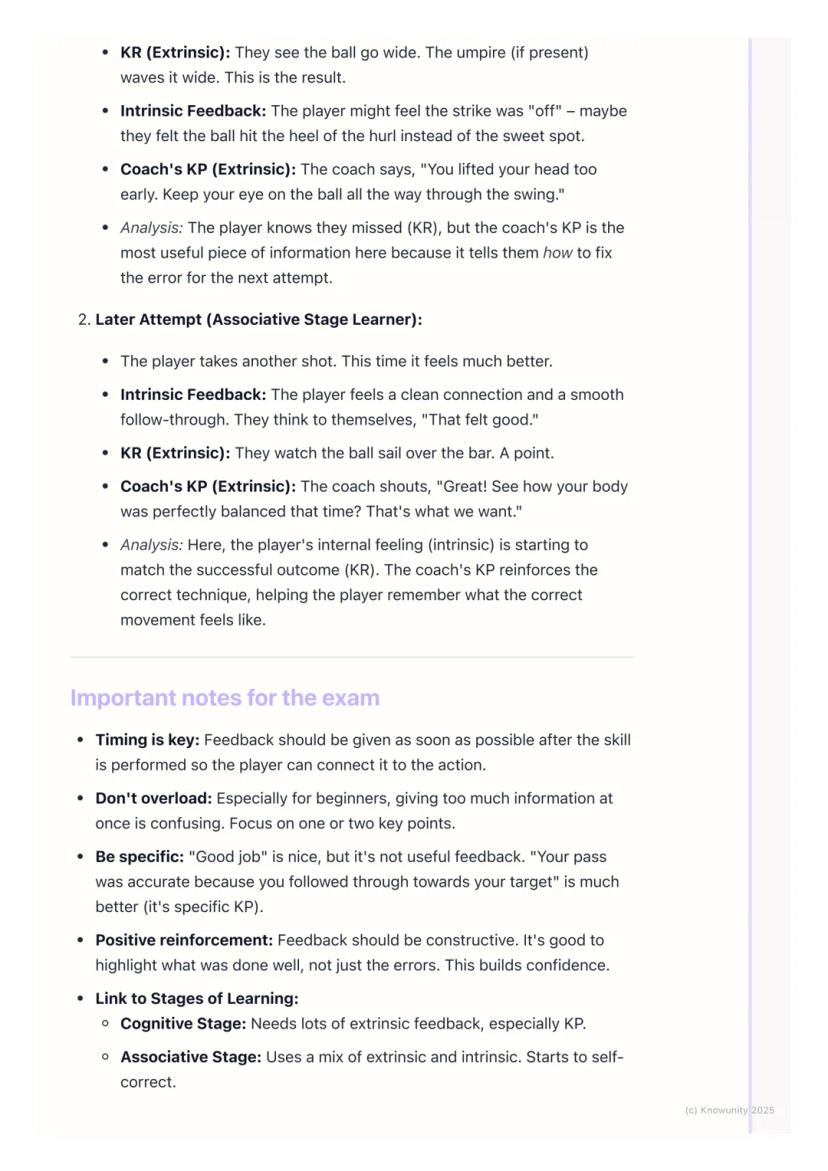
Your feedback needs change dramatically as you improve. In the cognitive stage (complete beginner), you need loads of extrinsic feedback, especially KP. You simply don't know what correct movement feels like yet, so coaches and external guidance are essential.
During the associative stage (getting better), you'll use a mix of both types. You're starting to self-correct based on how things feel, but you still benefit from external guidance for refining your technique.
By the autonomous stage (expert level), you rely mainly on intrinsic feedback for minor adjustments. You can feel exactly what went wrong the moment you complete a skill and adjust accordingly.
Remember: Don't overload beginners with information - focus on one or two key points at a time, and always be specific rather than just saying "good job."
5
of 5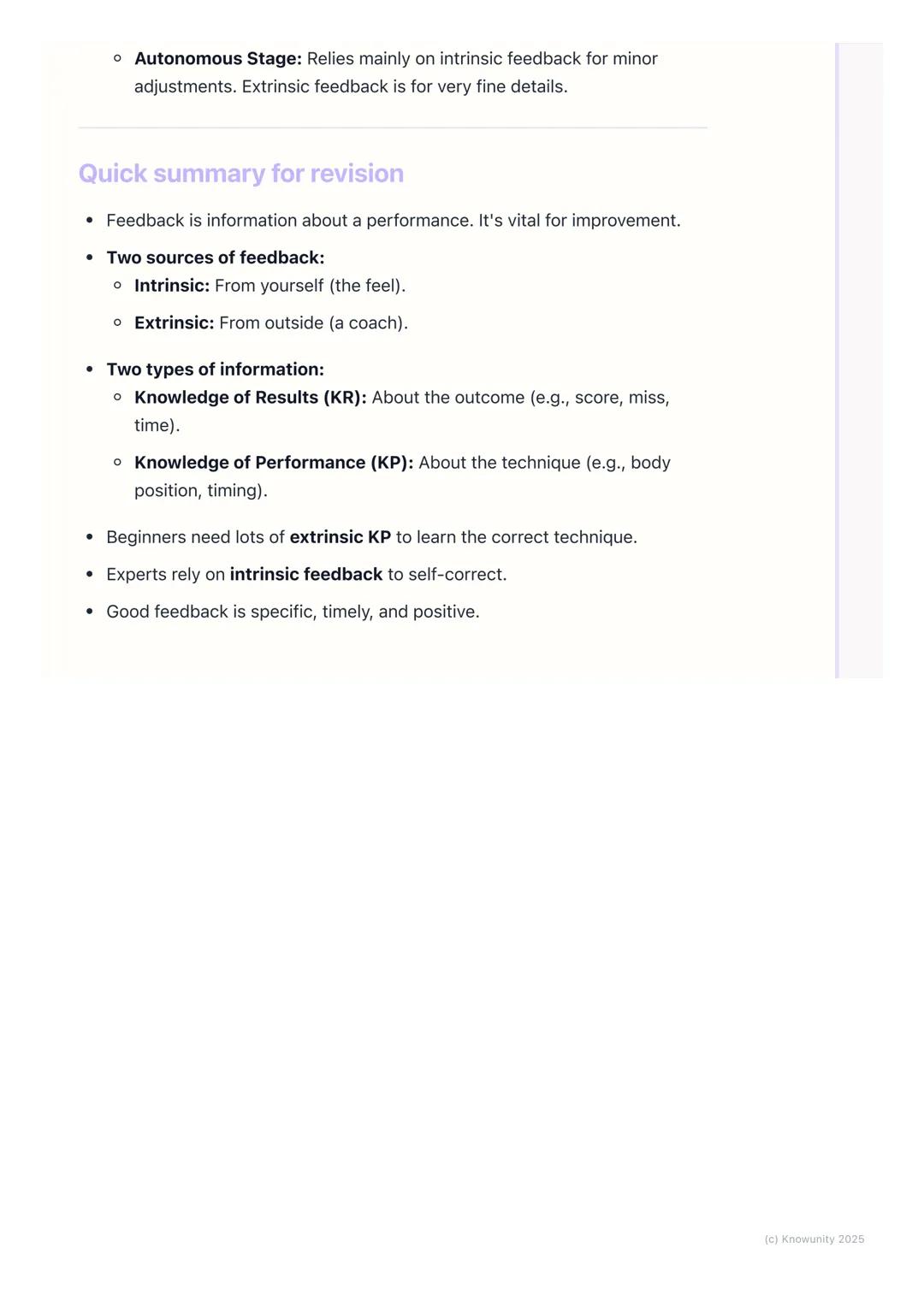
Quick Revision Summary
Here's everything you need to remember about feedback for your exams. Feedback is information about performance that's vital for improvement, and it comes from two sources: intrinsic (from yourself) and extrinsic (from outside sources like coaches).
The information itself falls into two categories: Knowledge of Results (about the outcome) and Knowledge of Performance (about technique). Beginners need lots of extrinsic KP to learn correct technique, while experts rely on intrinsic feedback to self-correct.
The golden rules for effective feedback are simple: make it specific, give it immediately after performance, and keep it positive and constructive. Remember that your feedback needs will change as you progress through the stages of learning.
Exam Tip: Be able to give practical examples of each type of feedback using sports you know well - it shows you really understand the concepts.
Mysleli sme si, že sa už nikdy neopýtaš...
Čo je Knowunity AI companion?
Náš AI Companion je AI nástroj zameraný na študentov, ktorý ponúka viac ako len odpovede. Postavený na miliónoch zdrojov Knowunity poskytuje relevantné informácie, personalizované študijné plány, kvízy a obsah priamo v chate, prispôsobujúc sa tvojej individuálnej ceste učenia.
Kde si môžem stiahnuť aplikáciu Knowunity?
Aplikáciu si môžeš stiahnuť z Google Play Store a Apple App Store.
Je Knowunity naozaj zadarmo?
Presne tak! Užívaj si bezplatný prístup k študijnému obsahu, spájaj sa s ostatnými študentmi a získaj okamžitú pomoc – všetko na dosah ruky.
Najobľúbenejší obsah v predmete LCPE
4LCPEHealthy Eating Guidelines
This section explores national healthy eating guidelines, such as the food pyramid or healthy eating plate, to promote balanced dietary choices.
5th Year50
LCPEBiomechanics of Movement
Applying fundamental biomechanical principles such as force, motion, levers, and stability to analyse and improve human movement efficiency and performance in sport.
6th Year200
LCPEFactors effecting sports psychology ( confidence and self efficacy)
Higher Level LCPE psychological preprration notes
5th Year230
LCPETechnology in Sport
Investigating how technology is used in areas such as performance analysis, equipment design, officiating, and athlete monitoring to enhance training and competition.
6th Year50
Najobľúbenejší obsah
9 Irish
IrishIrish oral questions and answers
Questions and answers for the leaving cert oral
5th Year4264
 English
Key Quotes : Sive
Key Quotes and explanations: Sive
6th Year2842
IrishIrish oral questions
Outline of oral questions
5th Year2055
IrishIníon- le hÁine Durkin
Aine Durkin’s poem, Iníon: Themes & summary
5th Year850
IrishIrish poetry 2027
Iníon + Dínit an Bhróin
5th Year1133
IrishLC HL notes- Iníon (poem)
Includes poem in English and Irish, theme, key words & phrases
5th Year2284
EnglishCultural Context : Shawshank Redemption : Sive : Small Things Like These
Comparative Study : Cultural Context : Shawshank Redemption, Sive and Small Things Like These
6th Year1430
IrishMo Ghrá-sa (Idir Lúibíní)
Notes on mo ghrá-sa
5th Year380
IrishAn Gaeilge Aiste
Irish Language essay
6th Year1320
Nenašiel si, čo hľadáš? Preskúmaj iné predmety.
Študenti nás milujú — a ty budeš tiež.
4.6/5App Store
4.7/5Google Play
Appka je veľmi jednoduchá na používanie a má super dizajn. Zatiaľ som našiel všetko, čo som hľadal, a naučil sa veľa z prezentácií! Určite ju použijem na školskú úlohu! A samozrejme mi to aj veľmi pomáha ako inšpirácia.
Stefan SiOS používateľ
Táto appka je naozaj skvelá. Je tu toľko študijných poznámok a pomoci [...]. Môj problémový predmet je napríklad francúzština a appka má toľko možností pomoci. Vďaka tejto appke som si zlepšil francúzštinu. Odporúčal by som ju každému.
Samantha KlichAndroid používateľka
Wow, som naozaj ohromený. Vyskúšal som túto appku, lebo som ju videl mnohokrát inzerovať a bol som úplne ohromený. Táto appka je TÁ POMOC, ktorú chceš do školy a hlavne ponúka toľko vecí, ako cvičenia a faktové listy, ktoré mi osobne VEĽMI pomohli.
AnnaiOS používateľka
LCPE2 zobrazenia·Aktualizované Jun 12, 2026·5 stránkyThe Power of Feedback in Learning New Skills
Ever wondered how you actually get better at sports? It's all about feedback - the information you receive about your performance. Whether it's the feeling of a perfect strike or a coach's advice, feedback is what transforms you from a...
1
of 5
Zaregistruj sa, aby si videl obsah. Je to zadarmo!
- Prístup ku všetkým dokumentom
- Zlepši si známky
- Pridaj sa k miliónom študentov
Understanding Feedback in Sports
Think about the last time you improved at something - chances are, someone told you what you were doing right or wrong. Feedback is simply information you receive about your performance, and it's absolutely crucial for getting better at any skill.
There are two main sources where this information comes from. Intrinsic feedback comes from within yourself - it's that feeling when you know you've hit the sweet spot of a tennis racket or when a football feels perfectly balanced on your boot. This is also called kinaesthetic feedback because it comes through your senses.
Extrinsic feedback comes from outside sources like coaches, teammates, video replays, or even the crowd. A GAA coach shouting "keep your head up" or watching yourself on video are perfect examples of extrinsic feedback.
Remember: The goal is to eventually rely more on your own internal feelings (intrinsic) and less on others telling you what to do (extrinsic).
2
of 5Zaregistruj sa, aby si videl obsah. Je to zadarmo!
- Prístup ku všetkým dokumentom
- Zlepši si známky
- Pridaj sa k miliónom študentov
Types of Feedback Information
Not all feedback tells you the same thing. Knowledge of Results (KR) is about the outcome - did you score, miss, win, or lose? It's usually pretty obvious: seeing your basketball shot go through the hoop or watching the umpire wave your tennis serve "out."
Knowledge of Performance (KP) is much more valuable for improvement. This focuses on your technique and how you performed the skill, not just the result. When a coach tells a Gaelic footballer "your follow-through was excellent on that kick," that's KP in action.
Here's the thing - just knowing you missed (KR) doesn't help you improve. You need to know why you missed, and that's where KP becomes crucial, especially for beginners who don't yet understand what correct movement should feel like.
Key Point: KP is generally more valuable than KR for skill improvement because it explains the 'why' behind your performance.
3
of 5Zaregistruj sa, aby si videl obsah. Je to zadarmo!
- Prístup ku všetkým dokumentom
- Zlepši si známky
- Pridaj sa k miliónom študentov
Putting Feedback into Practice
Let's imagine you're a hurler learning to take 65m frees. On your first attempt, the ball goes wide left. You can see it missed (KR), and you might feel the strike was "off" (intrinsic feedback). But the most useful information comes when your coach says, "You lifted your head too early - keep your eye on the ball through the entire swing" (extrinsic KP).
As you progress and reach the associative stage of learning, something interesting happens. You start to develop better internal awareness. When you take another shot, you feel a clean connection and smooth follow-through. Your intrinsic feedback tells you "that felt good" even before you see the ball sail over the bar.
The coach's job then becomes reinforcing what you did right: "Great! See how your body was perfectly balanced that time?" This helps you connect the feeling with the successful outcome.
Pro Tip: Timing matters - feedback works best when given immediately after the skill, so you can connect it to what you just did.
4
of 5Zaregistruj sa, aby si videl obsah. Je to zadarmo!
- Prístup ku všetkým dokumentom
- Zlepši si známky
- Pridaj sa k miliónom študentov
Feedback and Learning Stages
Your feedback needs change dramatically as you improve. In the cognitive stage (complete beginner), you need loads of extrinsic feedback, especially KP. You simply don't know what correct movement feels like yet, so coaches and external guidance are essential.
During the associative stage (getting better), you'll use a mix of both types. You're starting to self-correct based on how things feel, but you still benefit from external guidance for refining your technique.
By the autonomous stage (expert level), you rely mainly on intrinsic feedback for minor adjustments. You can feel exactly what went wrong the moment you complete a skill and adjust accordingly.
Remember: Don't overload beginners with information - focus on one or two key points at a time, and always be specific rather than just saying "good job."
5
of 5Zaregistruj sa, aby si videl obsah. Je to zadarmo!
- Prístup ku všetkým dokumentom
- Zlepši si známky
- Pridaj sa k miliónom študentov
Quick Revision Summary
Here's everything you need to remember about feedback for your exams. Feedback is information about performance that's vital for improvement, and it comes from two sources: intrinsic (from yourself) and extrinsic (from outside sources like coaches).
The information itself falls into two categories: Knowledge of Results (about the outcome) and Knowledge of Performance (about technique). Beginners need lots of extrinsic KP to learn correct technique, while experts rely on intrinsic feedback to self-correct.
The golden rules for effective feedback are simple: make it specific, give it immediately after performance, and keep it positive and constructive. Remember that your feedback needs will change as you progress through the stages of learning.
Exam Tip: Be able to give practical examples of each type of feedback using sports you know well - it shows you really understand the concepts.
Mysleli sme si, že sa už nikdy neopýtaš...
Čo je Knowunity AI companion?
Náš AI Companion je AI nástroj zameraný na študentov, ktorý ponúka viac ako len odpovede. Postavený na miliónoch zdrojov Knowunity poskytuje relevantné informácie, personalizované študijné plány, kvízy a obsah priamo v chate, prispôsobujúc sa tvojej individuálnej ceste učenia.
Kde si môžem stiahnuť aplikáciu Knowunity?
Aplikáciu si môžeš stiahnuť z Google Play Store a Apple App Store.
Je Knowunity naozaj zadarmo?
Presne tak! Užívaj si bezplatný prístup k študijnému obsahu, spájaj sa s ostatnými študentmi a získaj okamžitú pomoc – všetko na dosah ruky.
Najobľúbenejší obsah v predmete LCPE
4LCPEHealthy Eating Guidelines
This section explores national healthy eating guidelines, such as the food pyramid or healthy eating plate, to promote balanced dietary choices.
5th Year50
LCPEBiomechanics of Movement
Applying fundamental biomechanical principles such as force, motion, levers, and stability to analyse and improve human movement efficiency and performance in sport.
6th Year200
LCPEFactors effecting sports psychology ( confidence and self efficacy)
Higher Level LCPE psychological preprration notes
5th Year230
LCPETechnology in Sport
Investigating how technology is used in areas such as performance analysis, equipment design, officiating, and athlete monitoring to enhance training and competition.
6th Year50
Najobľúbenejší obsah
9IrishIrish oral questions and answers
Questions and answers for the leaving cert oral
5th Year4264
EnglishKey Quotes : Sive
Key Quotes and explanations: Sive
6th Year2842
IrishIrish oral questions
Outline of oral questions
5th Year2055
IrishIníon- le hÁine Durkin
Aine Durkin’s poem, Iníon: Themes & summary
5th Year850
IrishIrish poetry 2027
Iníon + Dínit an Bhróin
5th Year1133
IrishLC HL notes- Iníon (poem)
Includes poem in English and Irish, theme, key words & phrases
5th Year2284
EnglishCultural Context : Shawshank Redemption : Sive : Small Things Like These
Comparative Study : Cultural Context : Shawshank Redemption, Sive and Small Things Like These
6th Year1430
IrishMo Ghrá-sa (Idir Lúibíní)
Notes on mo ghrá-sa
5th Year380
IrishAn Gaeilge Aiste
Irish Language essay
6th Year1320
Nenašiel si, čo hľadáš? Preskúmaj iné predmety.
Študenti nás milujú — a ty budeš tiež.
4.6/5App Store
4.7/5Google Play
Appka je veľmi jednoduchá na používanie a má super dizajn. Zatiaľ som našiel všetko, čo som hľadal, a naučil sa veľa z prezentácií! Určite ju použijem na školskú úlohu! A samozrejme mi to aj veľmi pomáha ako inšpirácia.
Stefan SiOS používateľ
Táto appka je naozaj skvelá. Je tu toľko študijných poznámok a pomoci [...]. Môj problémový predmet je napríklad francúzština a appka má toľko možností pomoci. Vďaka tejto appke som si zlepšil francúzštinu. Odporúčal by som ju každému.
Samantha KlichAndroid používateľka
Wow, som naozaj ohromený. Vyskúšal som túto appku, lebo som ju videl mnohokrát inzerovať a bol som úplne ohromený. Táto appka je TÁ POMOC, ktorú chceš do školy a hlavne ponúka toľko vecí, ako cvičenia a faktové listy, ktoré mi osobne VEĽMI pomohli.
AnnaiOS používateľka