
Engineering is everywhere around you – from the bridges you... Zobraziť viac
 Engineering5 zobrazenia·Aktualizované May 30, 2026·7 stránky
Exploring Different Engineering Fields

1 / 7
1
of 7
What is Engineering?
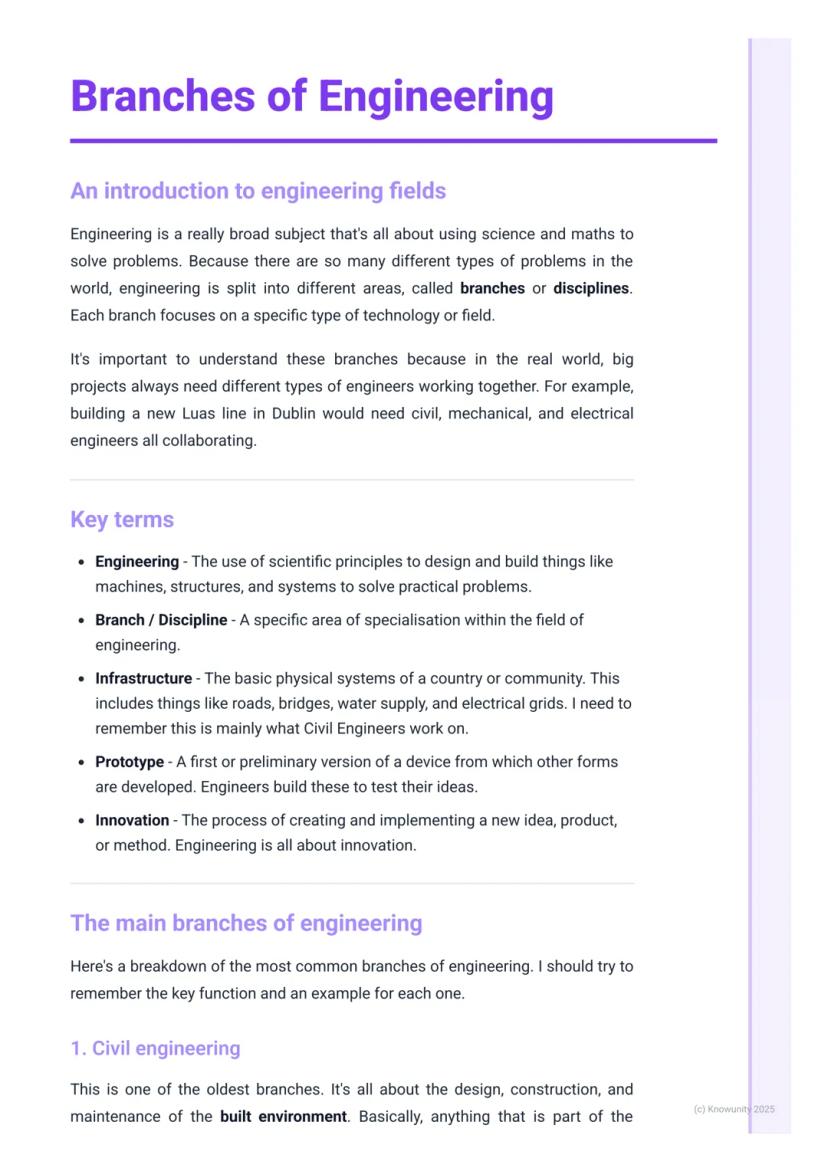
Ever wondered who designs the Luas system or creates the apps on your phone? That's engineering – the art of using scientific principles to build machines, structures, and systems that make life better. It's not just one job though; it's split into loads of different branches or disciplines, each tackling specific types of challenges.
The coolest part? Engineers from different branches always work together on big projects. Building something like the Samuel Beckett Bridge in Dublin needed civil engineers for the structure, mechanical engineers for the moving parts, and electrical engineers for the lighting systems.
Understanding these branches is dead useful because it shows you the massive range of career paths available. Plus, knowing how they connect helps you see the bigger picture of how our modern world actually works.
Key Insight: Think of engineering branches like different instruments in an orchestra – each has its own role, but they create something amazing when they work together.
2
of 7
Civil and Mechanical Engineering
Civil engineering is probably the most visible branch around you. These are the people who design and build our infrastructure – basically everything that makes a city function. They're behind roads, bridges, tunnels, and massive buildings like Croke Park. Within civil engineering, you've got structural engineers making sure buildings don't collapse, environmental engineers sorting out recycling and water treatment, and geotechnical engineers dealing with soil and foundations.
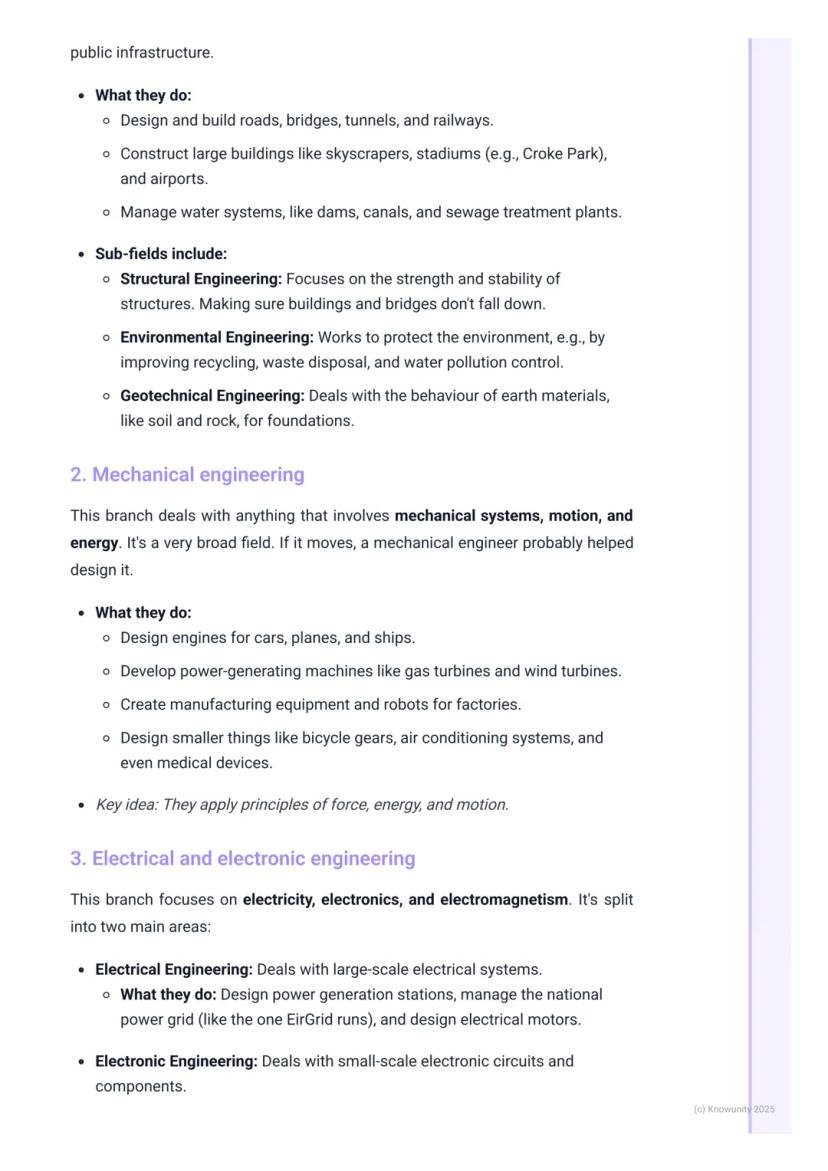
Mechanical engineering is all about movement and energy. If it moves, spins, or generates power, a mechanical engineer probably had a hand in designing it. They create car engines, wind turbine systems like those at Galway Wind Park, factory robots, and even the gears on your bike.
The key difference? Civil engineers build the world around us, whilst mechanical engineers make things move within that world. Both are absolutely essential for modern life.
Remember: Civil = structures that don't move, Mechanical = anything with motion or energy transfer.
3
of 7
Electrical and Biomedical Engineering
Electrical engineering splits into two main areas that often get mixed up. Electrical engineers work with large-scale power systems – think the national grid that EirGrid manages, power stations, and the massive electrical systems in buildings. Electronic engineers focus on smaller circuits and components like the microchips in your phone, WiFi systems, and computer hardware.
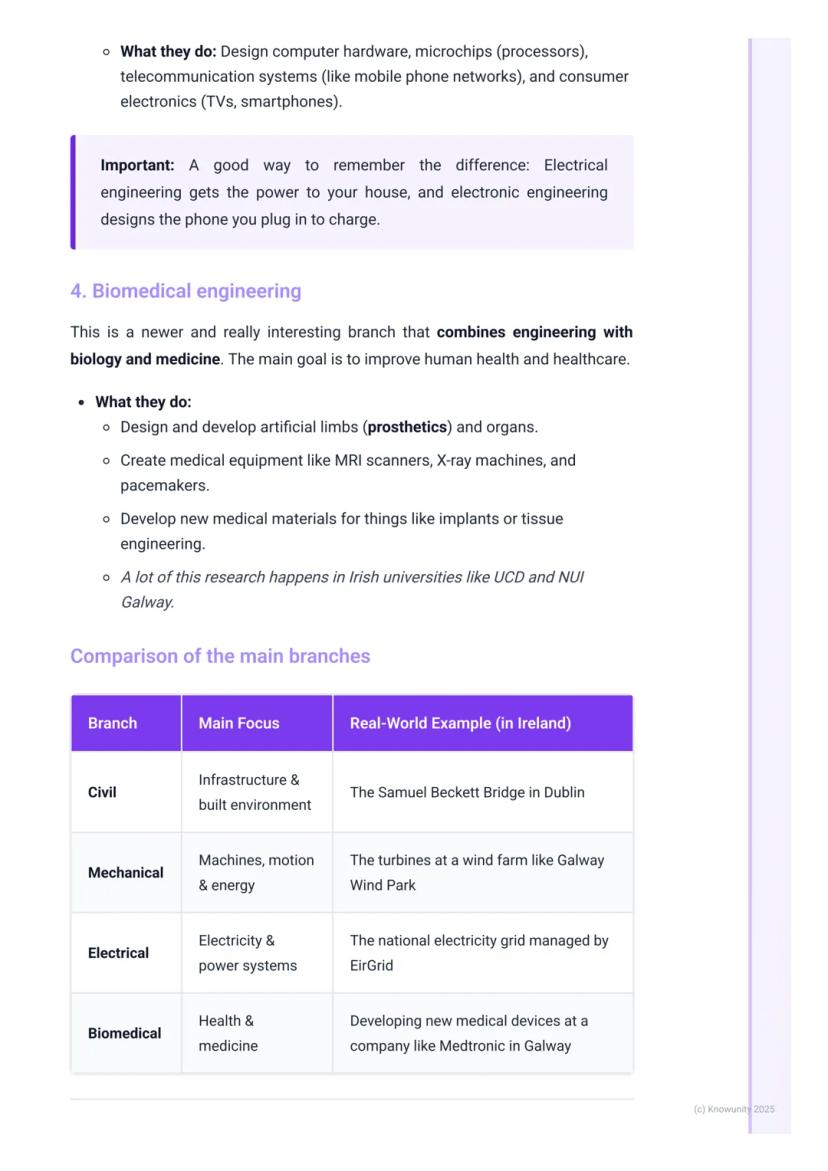
Biomedical engineering is where engineering meets medicine, and it's absolutely fascinating. These engineers create prosthetics (artificial limbs), design MRI scanners, develop pacemakers, and work on cutting-edge stuff like artificial organs. Loads of this research happens right here in Irish universities and companies like Medtronic in Galway.
Here's a handy way to remember electrical vs electronic: electrical engineering gets the power to your house, electronic engineering designs the devices you plug in once it gets there.
Cool Fact: Biomedical engineering is one of the fastest-growing branches because our ageing population needs more medical technology and innovation.
4
of 7
Real-World Engineering Teamwork
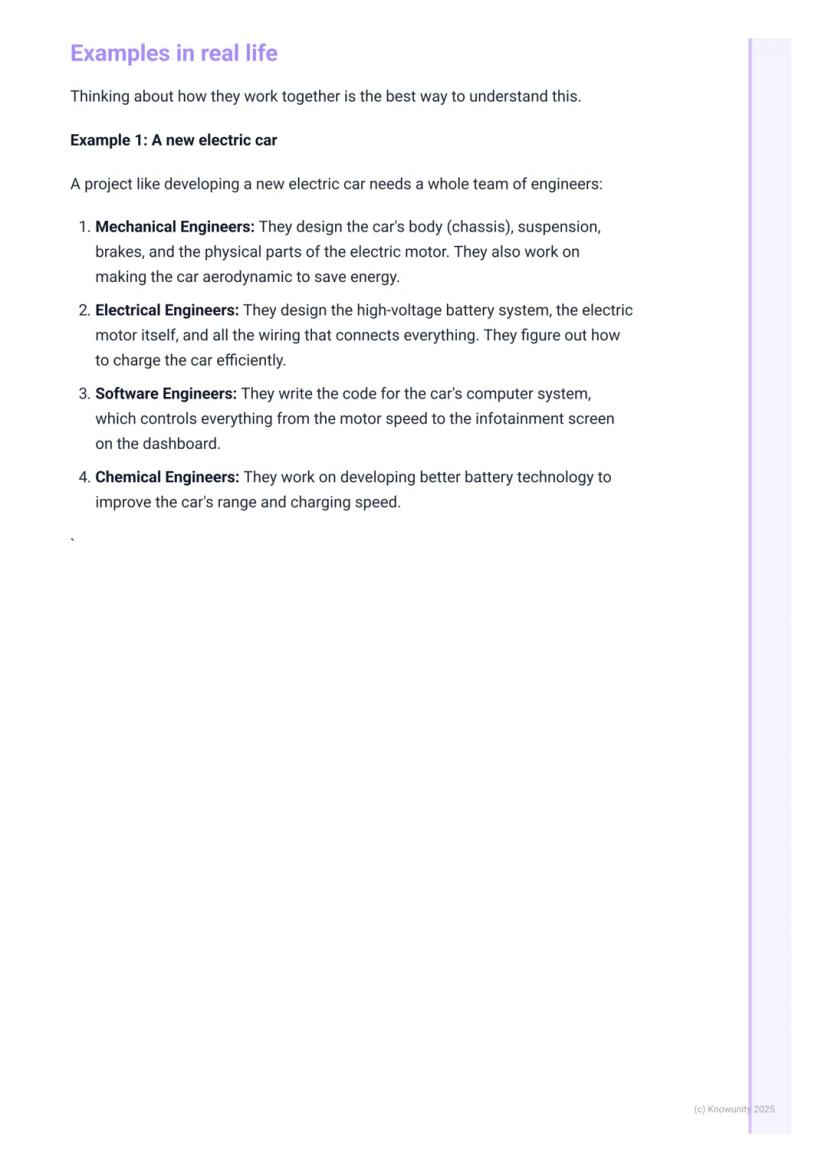
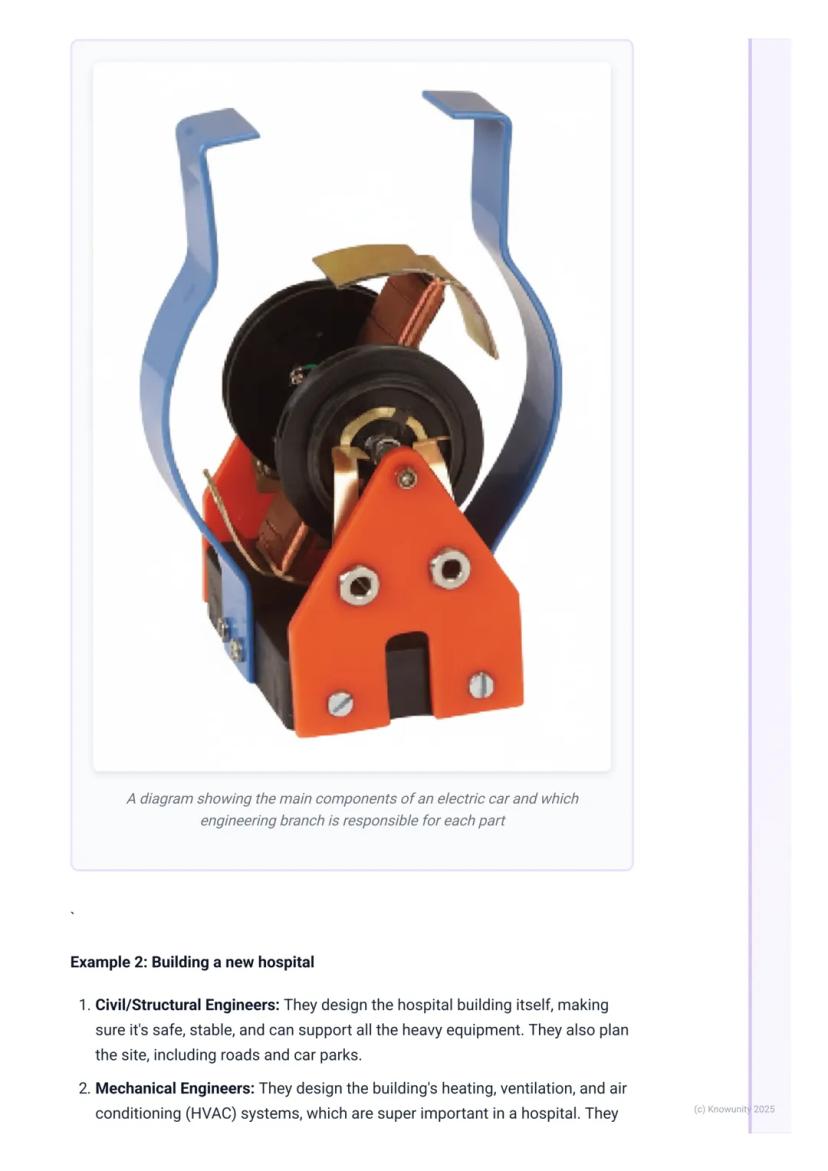
The best way to understand engineering branches is seeing how they collaborate on actual projects. Take developing a new electric car – it's impossible without teamwork.
Mechanical engineers design the car's body, suspension, and brakes. They also work on aerodynamics to make the car slice through air efficiently. Electrical engineers create the battery systems and electric motors, plus all the wiring that connects everything together.
Software engineers write the code that controls the motor speed and runs the dashboard display. Chemical engineers develop better battery technology so the car can travel further on a single charge. Each engineer brings their expertise, but none could build the entire car alone.
This collaborative approach is what makes modern engineering so powerful – and why understanding different branches helps you see the complete picture.
Think About It: Every complex product around you – from your smartphone to the building you're in – required multiple engineering disciplines working together.
5
of 7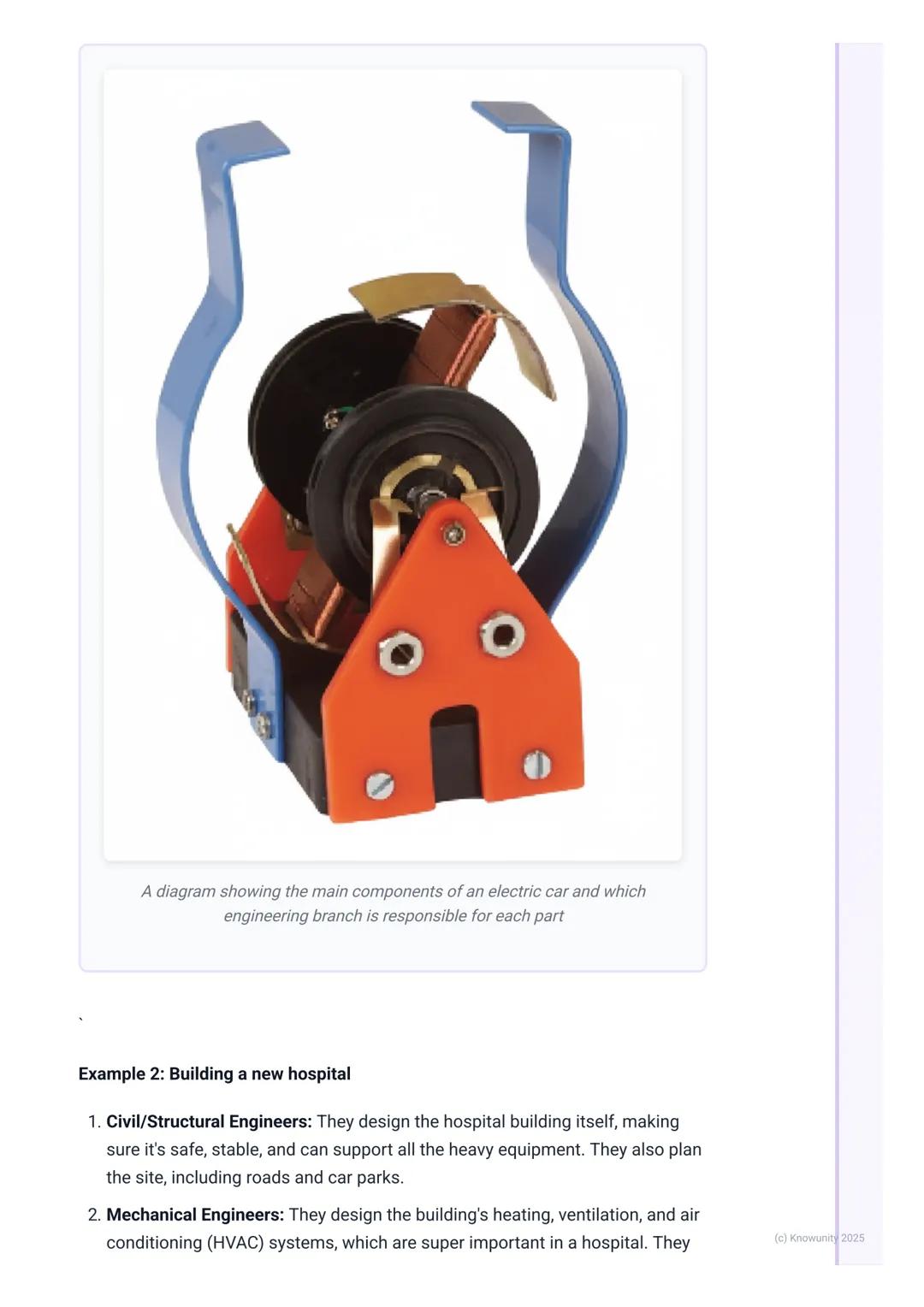
Engineering a Hospital
Building a new hospital shows engineering teamwork at its finest. Civil engineers design the actual building structure, making sure it can support heavy medical equipment and handle thousands of people safely. They also plan the site layout, including car parks and access roads.
Mechanical engineers are crucial for the building's heating, ventilation, and air conditioning systems – imagine how important clean air is in a hospital! They also design lift systems and all the plumbing for water supply and waste management.
Electrical engineers plan the entire power system, including backup generators for emergencies (you definitely don't want the power cutting out during surgery!). They handle all the wiring for lighting, computers, and medical equipment.
Biomedical engineers work with doctors to choose and install specialised medical equipment like MRI scanners, life support systems, and surgical tools. They make sure everything integrates properly and train staff on new technology.
Essential Point: Complex projects like hospitals need every engineering branch – there's no such thing as a solo engineering project at this scale.
6
of 7
Key Points for Success
The biggest thing to remember is that engineering is collaborative. No single branch can tackle complex modern problems alone – they need each other. Don't just memorise the names; understand what each branch actually does at its core.
Think of it this way: Civil builds structures, Mechanical creates movement, Electrical handles power and circuits, Biomedical focuses on health. Use local examples when you can – like figuring out which engineers were needed for a major construction project near you.
A common mistake is mixing up electrical and electronic engineering, or thinking mechanical engineers only work on cars. Remember that each branch is much broader than it first appears, with loads of sub-fields and specialisations within them.
The most important takeaway? Engineering touches every aspect of modern life, from the infrastructure we rely on daily to the innovation that drives technological progress.
Exam Tip: Always try to give specific, real-world examples when discussing engineering branches – it shows you understand how the theory applies in practice.
7
of 7
Mysleli sme si, že sa už nikdy neopýtaš...
Čo je Knowunity AI companion?
Náš AI Companion je AI nástroj zameraný na študentov, ktorý ponúka viac ako len odpovede. Postavený na miliónoch zdrojov Knowunity poskytuje relevantné informácie, personalizované študijné plány, kvízy a obsah priamo v chate, prispôsobujúc sa tvojej individuálnej ceste učenia.
Kde si môžem stiahnuť aplikáciu Knowunity?
Aplikáciu si môžeš stiahnuť z Google Play Store a Apple App Store.
Je Knowunity naozaj zadarmo?
Presne tak! Užívaj si bezplatný prístup k študijnému obsahu, spájaj sa s ostatnými študentmi a získaj okamžitú pomoc – všetko na dosah ruky.
Najobľúbenejší obsah
9Nenašiel si, čo hľadáš? Preskúmaj iné predmety.
Študenti nás milujú — a ty budeš tiež.
4.6/5App Store
4.7/5Google Play
Appka je veľmi jednoduchá na používanie a má super dizajn. Zatiaľ som našiel všetko, čo som hľadal, a naučil sa veľa z prezentácií! Určite ju použijem na školskú úlohu! A samozrejme mi to aj veľmi pomáha ako inšpirácia.
Stefan SiOS používateľ
Táto appka je naozaj skvelá. Je tu toľko študijných poznámok a pomoci [...]. Môj problémový predmet je napríklad francúzština a appka má toľko možností pomoci. Vďaka tejto appke som si zlepšil francúzštinu. Odporúčal by som ju každému.
Samantha KlichAndroid používateľka
Wow, som naozaj ohromený. Vyskúšal som túto appku, lebo som ju videl mnohokrát inzerovať a bol som úplne ohromený. Táto appka je TÁ POMOC, ktorú chceš do školy a hlavne ponúka toľko vecí, ako cvičenia a faktové listy, ktoré mi osobne VEĽMI pomohli.
AnnaiOS používateľka
Engineering5 zobrazenia·Aktualizované May 30, 2026·7 stránkyExploring Different Engineering Fields
Engineering is everywhere around you – from the bridges you cross to the phone in your pocket. It's basically about using science and maths to solve real problems, but because there are so many different types of problems, engineers specialise... Zobraziť viac
1
of 7Zaregistruj sa, aby si videl obsah. Je to zadarmo!
- Prístup ku všetkým dokumentom
- Zlepši si známky
- Pridaj sa k miliónom študentov
What is Engineering?
Ever wondered who designs the Luas system or creates the apps on your phone? That's engineering – the art of using scientific principles to build machines, structures, and systems that make life better. It's not just one job though; it's split into loads of different branches or disciplines, each tackling specific types of challenges.
The coolest part? Engineers from different branches always work together on big projects. Building something like the Samuel Beckett Bridge in Dublin needed civil engineers for the structure, mechanical engineers for the moving parts, and electrical engineers for the lighting systems.
Understanding these branches is dead useful because it shows you the massive range of career paths available. Plus, knowing how they connect helps you see the bigger picture of how our modern world actually works.
Key Insight: Think of engineering branches like different instruments in an orchestra – each has its own role, but they create something amazing when they work together.
2
of 7Zaregistruj sa, aby si videl obsah. Je to zadarmo!
- Prístup ku všetkým dokumentom
- Zlepši si známky
- Pridaj sa k miliónom študentov
Civil and Mechanical Engineering
Civil engineering is probably the most visible branch around you. These are the people who design and build our infrastructure – basically everything that makes a city function. They're behind roads, bridges, tunnels, and massive buildings like Croke Park. Within civil engineering, you've got structural engineers making sure buildings don't collapse, environmental engineers sorting out recycling and water treatment, and geotechnical engineers dealing with soil and foundations.
Mechanical engineering is all about movement and energy. If it moves, spins, or generates power, a mechanical engineer probably had a hand in designing it. They create car engines, wind turbine systems like those at Galway Wind Park, factory robots, and even the gears on your bike.
The key difference? Civil engineers build the world around us, whilst mechanical engineers make things move within that world. Both are absolutely essential for modern life.
Remember: Civil = structures that don't move, Mechanical = anything with motion or energy transfer.
3
of 7Zaregistruj sa, aby si videl obsah. Je to zadarmo!
- Prístup ku všetkým dokumentom
- Zlepši si známky
- Pridaj sa k miliónom študentov
Electrical and Biomedical Engineering
Electrical engineering splits into two main areas that often get mixed up. Electrical engineers work with large-scale power systems – think the national grid that EirGrid manages, power stations, and the massive electrical systems in buildings. Electronic engineers focus on smaller circuits and components like the microchips in your phone, WiFi systems, and computer hardware.
Biomedical engineering is where engineering meets medicine, and it's absolutely fascinating. These engineers create prosthetics (artificial limbs), design MRI scanners, develop pacemakers, and work on cutting-edge stuff like artificial organs. Loads of this research happens right here in Irish universities and companies like Medtronic in Galway.
Here's a handy way to remember electrical vs electronic: electrical engineering gets the power to your house, electronic engineering designs the devices you plug in once it gets there.
Cool Fact: Biomedical engineering is one of the fastest-growing branches because our ageing population needs more medical technology and innovation.
4
of 7Zaregistruj sa, aby si videl obsah. Je to zadarmo!
- Prístup ku všetkým dokumentom
- Zlepši si známky
- Pridaj sa k miliónom študentov
Real-World Engineering Teamwork
The best way to understand engineering branches is seeing how they collaborate on actual projects. Take developing a new electric car – it's impossible without teamwork.
Mechanical engineers design the car's body, suspension, and brakes. They also work on aerodynamics to make the car slice through air efficiently. Electrical engineers create the battery systems and electric motors, plus all the wiring that connects everything together.
Software engineers write the code that controls the motor speed and runs the dashboard display. Chemical engineers develop better battery technology so the car can travel further on a single charge. Each engineer brings their expertise, but none could build the entire car alone.
This collaborative approach is what makes modern engineering so powerful – and why understanding different branches helps you see the complete picture.
Think About It: Every complex product around you – from your smartphone to the building you're in – required multiple engineering disciplines working together.
5
of 7Zaregistruj sa, aby si videl obsah. Je to zadarmo!
- Prístup ku všetkým dokumentom
- Zlepši si známky
- Pridaj sa k miliónom študentov
Engineering a Hospital
Building a new hospital shows engineering teamwork at its finest. Civil engineers design the actual building structure, making sure it can support heavy medical equipment and handle thousands of people safely. They also plan the site layout, including car parks and access roads.
Mechanical engineers are crucial for the building's heating, ventilation, and air conditioning systems – imagine how important clean air is in a hospital! They also design lift systems and all the plumbing for water supply and waste management.
Electrical engineers plan the entire power system, including backup generators for emergencies (you definitely don't want the power cutting out during surgery!). They handle all the wiring for lighting, computers, and medical equipment.
Biomedical engineers work with doctors to choose and install specialised medical equipment like MRI scanners, life support systems, and surgical tools. They make sure everything integrates properly and train staff on new technology.
Essential Point: Complex projects like hospitals need every engineering branch – there's no such thing as a solo engineering project at this scale.
6
of 7Zaregistruj sa, aby si videl obsah. Je to zadarmo!
- Prístup ku všetkým dokumentom
- Zlepši si známky
- Pridaj sa k miliónom študentov
Key Points for Success
The biggest thing to remember is that engineering is collaborative. No single branch can tackle complex modern problems alone – they need each other. Don't just memorise the names; understand what each branch actually does at its core.
Think of it this way: Civil builds structures, Mechanical creates movement, Electrical handles power and circuits, Biomedical focuses on health. Use local examples when you can – like figuring out which engineers were needed for a major construction project near you.
A common mistake is mixing up electrical and electronic engineering, or thinking mechanical engineers only work on cars. Remember that each branch is much broader than it first appears, with loads of sub-fields and specialisations within them.
The most important takeaway? Engineering touches every aspect of modern life, from the infrastructure we rely on daily to the innovation that drives technological progress.
Exam Tip: Always try to give specific, real-world examples when discussing engineering branches – it shows you understand how the theory applies in practice.
7
of 7Zaregistruj sa, aby si videl obsah. Je to zadarmo!
- Prístup ku všetkým dokumentom
- Zlepši si známky
- Pridaj sa k miliónom študentov
Mysleli sme si, že sa už nikdy neopýtaš...
Čo je Knowunity AI companion?
Náš AI Companion je AI nástroj zameraný na študentov, ktorý ponúka viac ako len odpovede. Postavený na miliónoch zdrojov Knowunity poskytuje relevantné informácie, personalizované študijné plány, kvízy a obsah priamo v chate, prispôsobujúc sa tvojej individuálnej ceste učenia.
Kde si môžem stiahnuť aplikáciu Knowunity?
Aplikáciu si môžeš stiahnuť z Google Play Store a Apple App Store.
Je Knowunity naozaj zadarmo?
Presne tak! Užívaj si bezplatný prístup k študijnému obsahu, spájaj sa s ostatnými študentmi a získaj okamžitú pomoc – všetko na dosah ruky.
Najobľúbenejší obsah
9Nenašiel si, čo hľadáš? Preskúmaj iné predmety.
Študenti nás milujú — a ty budeš tiež.
4.6/5App Store
4.7/5Google Play
Appka je veľmi jednoduchá na používanie a má super dizajn. Zatiaľ som našiel všetko, čo som hľadal, a naučil sa veľa z prezentácií! Určite ju použijem na školskú úlohu! A samozrejme mi to aj veľmi pomáha ako inšpirácia.
Stefan SiOS používateľ
Táto appka je naozaj skvelá. Je tu toľko študijných poznámok a pomoci [...]. Môj problémový predmet je napríklad francúzština a appka má toľko možností pomoci. Vďaka tejto appke som si zlepšil francúzštinu. Odporúčal by som ju každému.
Samantha KlichAndroid používateľka
Wow, som naozaj ohromený. Vyskúšal som túto appku, lebo som ju videl mnohokrát inzerovať a bol som úplne ohromený. Táto appka je TÁ POMOC, ktorú chceš do školy a hlavne ponúka toľko vecí, ako cvičenia a faktové listy, ktoré mi osobne VEĽMI pomohli.
AnnaiOS používateľka